Deaths of Despair Shortlisted for FT/McKinsey 2020 Business Book of the Year




Mutiny tore like wildfire through the wooden warships of the age of revolution. While commoners across Europe laid siege to the nobility and enslaved workers put the torch to plantation islands, out on the oceans, naval seamen by the tens of thousands turned their guns on the quarterdeck and overthrew the absolute rule of captains. By the early 1800s, anywhere between one-third and one-half of all naval seamen serving in the North Atlantic had participated in at least one mutiny, many of them in several, and some even on ships in different navies. In The Bloody Flag, historian Niklas Frykman explores in vivid prose how a decade of violent conflict onboard gave birth to a distinct form of radical politics that brought together the egalitarian culture of North Atlantic maritime communities with the revolutionary era’s constitutional republicanism. The attempt to build a radical maritime republic failed, but the red flag that flew from the masts of mutinous ships survived to become the most enduring global symbol of class struggle, economic justice, and republican liberty to this day.

Since its founding in 1947, the legendary Magnum Photos agency has been telling its own story about photographers who were witnesses to history and artists on the hunt for decisive moments. Based on unprecedented archival research, The Decisive Network unravels Magnum’s mythologies to offer a new history of what it meant to shoot, edit, and sell news images after World War II. Read more about the book on the UC Press Blog.

Hitler’s Northern Utopia: Building the New Order in Occupied Norway by Despina Stratigakos tells the fascinating untold story of how Nazi architects and planners envisioned and began to build a model “Aryan” society in Norway during World War II
The book has just been reviewed in the Washington Post.

https://press.princeton.edu/books/paperback/9780691199795/britains-birds

Read an article by the author on the Columbia University Press Blog:

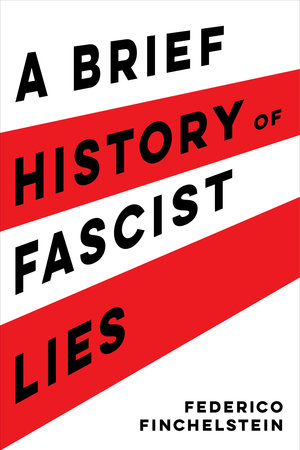
In this short book, world-renowned historian Federico Finchelstein explains why fascists regarded simple and often hateful lies as truth, and why so many of their followers believed the falsehoods. Throughout the history of the twentieth century, many supporters of fascist ideologies regarded political lies as truth incarnated in their leader. This history continues in the present, when lies again seem to increasingly replace empirical truth, and has a long political and intellectual lineage that we cannot ignore.
Booksmith and UC Press present a 6-part series of virtual events focused on urgent societal issues, broadcasting every Monday at 11am PST. This second event in the series features Federico Finchelstein discussing his book A Brief History of Fascist Lies. It’s on August 10th at 11am San Francisco time (7pm UK time).
This is a free event, but RSVP is required. RSVP here.
https://www.booksmith.com/event/virtual-federico-finchelstein-brief-history-fascist-lies